
We may earn a commission when you buy through links on this page, at no extra cost to you. It never decides what we recommend. How we make money
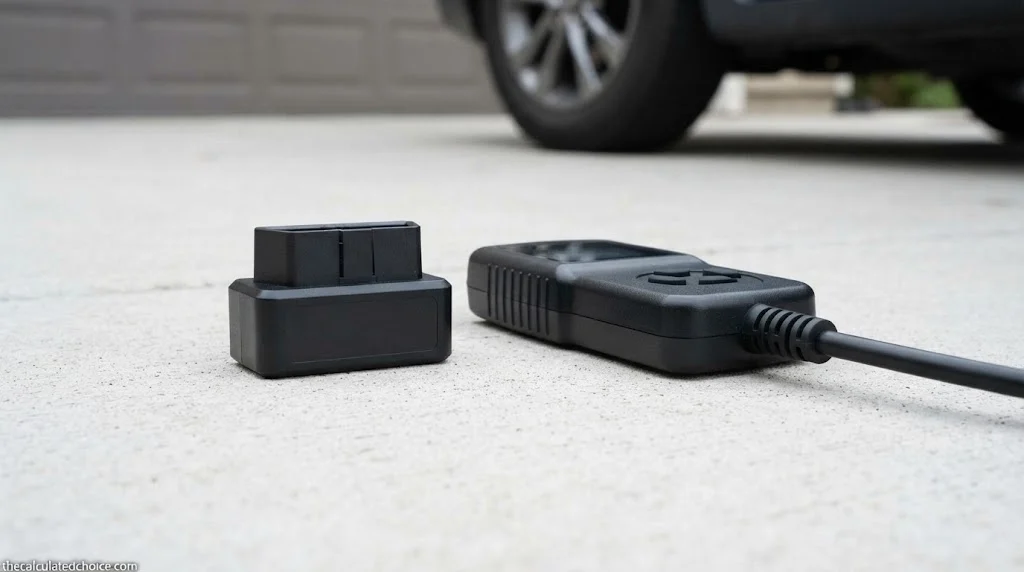
Choosing between a bluetooth vs wired obd2 scanner comes down to how you diagnose cars, how long your vehicle sits between drives, and which control modules you need to reach. Both types plug into the same standardized 16-pin Data Link Connector (DLC) under the dashboard, but they split the work differently: a corded handheld has its own screen, buttons, and firmware, while a Bluetooth dongle is a wireless bridge that hands the display and software over to your iPhone or Android phone.
Picking the wrong format causes headaches right when you need answers. Leave a Bluetooth adapter without a low-power sleep mode plugged in while the car sits for weeks and it can drain the battery. Buy an entry-level corded reader expecting ABS or airbag coverage and you will hit a wall. Below we compare the published specs of the ANCEL AD310, Veepeak OBDCheck BLE, OBDLink MX+ and CX, BlueDriver Pro, and Innova 5610 so you can match the tool to your garage. For the code side of the story, start with our guide to check engine light codes.
Quick answer
- Core trade-offWired readers win for plug-and-scan simplicity with no phone pairing; Bluetooth dongles win for live-data graphing on a phone screen and, on some models, deeper module access.
- Battery drawPublished active draw is 45 mA for the Veepeak OBDCheck BLE, 55 mA for the OBDLink CX, and 62 mA for the OBDLink MX+, and the two OBDLink models drop to under 1 mA (CX) and 2 mA (MX+) in sleep mode.
- TemperatureThe ANCEL AD310 handheld is rated 0 to 60°C (32 to 140°F) for operation, the Veepeak dongle -40 to 185°F, and the OBDLink MX+ and CX -4 to 131°F.
- Deep modulesThe Veepeak OBDCheck BLE does not support Ford MS-CAN or GM SW-CAN; the OBDLink MX+ does.
- Active testsBidirectional tests and 35 workshop tools are listed on the Innova 5610 handheld, while Veepeak lists oil light, maintenance, and brake resets as unsupported.
Bluetooth vs wired OBD2 scanner: 7 core differences
When you compare a bluetooth vs wired obd2 scanner side by side, the biggest differences show up in power draw, screen, app dependence, and module coverage. The table summarizes published specifications for representative models.
| Comparison Factor | Bluetooth OBD2 Scanner (Dongle + Phone App) | Wired OBD2 Scanner (Handheld Corded Unit) |
|---|---|---|
| 1. Display & Controls | Uses your phone or tablet screen; the OBDLink MX+ adds a physical Connect button that must be pressed to enable pairing | Built-in screen and buttons; the ANCEL AD310 has a 128 x 64 pixel backlit LCD with contrast adjustment and 4 buttons |
| 2. Power & Parasitic Draw | Veepeak: 9-16V, max 45 mA. OBDLink MX+: 8-18V, 62 mA, 2 mA BatterySaver mode. OBDLink CX: 55 mA, under 1 mA BatterySaver mode | ANCEL AD310 takes 8.0 to 18.0 V from the vehicle battery through the DLC and needs no batteries or charger; unplugged, it draws nothing from the car |
| 3. Setup & Connection | Needs an app and Bluetooth pairing; on Veepeak and OBDLink CX the connection is made inside the app rather than in the phone’s Bluetooth settings | Plug in the cable and go; the ANCEL AD310 has a 2.5 ft cable |
| 4. App & Update Costs | OBDLink includes free iOS, Android, and Windows apps and free firmware updates. Veepeak relies on third-party apps, some sold separately | Innova states updates for the 5610 are free with no subscriptions; the ANCEL AD310 is a self-contained unit |
| 5. Proprietary CAN & Modules | Veepeak OBDCheck BLE: MS-CAN and SW-CAN not supported. OBDLink MX+: supports both. BlueDriver Pro: enhanced ABS, airbag, transmission, and TPMS codes on supported makes | ANCEL AD310 covers generic and manufacturer-specific engine DTCs; the Innova 5610 lists all 10 OBD modes, bidirectional tests, and 35 workshop tools |
| 6. Size & Weight | OBDLink CX 0.7 oz (20 g); Veepeak 2.11 oz; OBDLink MX+ 3 oz (85.1 g) | ANCEL AD310: 125 x 70 x 22 mm (5.00 x 2.80 x 0.90 in), net weight 0.23 kg (0.51 lb) |
| 7. Operating Temperature | OBDLink MX+ and CX: -4 to 131°F (-20 to 55°C). Veepeak: -40 to 185°F (-40 to 85°C) | ANCEL AD310: 0 to 60°C (32 to 140°F) operating, -20 to 70°C (-4 to 158°F) storage |
Battery drain and power math: bluetooth vs wired OBD2 scanner
A key check in any bluetooth vs wired obd2 scanner decision is how the tool draws power through the DLC. A corded handheld such as the ANCEL AD310 is a temporary test tool: you plug in, scan, and unplug, so it causes no drain while the car is parked. A dongle is small enough that many people leave it in the port to log trips or watch live gauges, and then its published current draw matters.
- Standard Bluetooth LE dongle: The Veepeak OBDCheck BLE specification page lists 9V to 16V operating voltage and a maximum operating current of 45 mA, and its FAQ strongly recommends removing the device if the car sits for more than 1 week.
- Dongles with a low-power sleep mode: The OBDLink MX+ page lists 62 mA operating current and 2 mA in BatterySaver mode; the OBDLink CX page lists 55 mA and under 1 mA. Both list overvoltage protection up to 100V and an 8-18V operating range.
7-Day Parked Battery Drain (Worst-Case Active Draw vs Sleep Mode)
Step 1: Weekly drain in amp-hours (Ah) = (current in mA x 168 hours) / 1,000Example A (no sleep mode): Veepeak at 45 mA: (45 x 168) / 1,000 = 7.56 Ah per week. OBDLink MX+ at 62 mA: (62 x 168) / 1,000 = 10.42 Ah per week.Example B (sleep mode): OBDLink MX+ at 2 mA: (2 x 168) / 1,000 = 0.34 Ah per week. OBDLink CX at under 1 mA: below 0.17 Ah per week.Example C (unplugged corded scanner): 0 Ah.Why this matters: these are worst-case figures that assume the maximum published current all week, which is not how a dongle behaves in practice, but they show why sleep mode matters and why any always-on accessory can add up on a parked car. Sources: Veepeak, OBDLink MX+, OBDLink CX.
Bluetooth vs wired OBD2 scanner protocol and module coverage
A common misconception in the bluetooth vs wired obd2 scanner debate is that any dongle plus a paid app can read every module. Apps cannot overcome limits in the adapter hardware. Every compliant adapter handles the legislated OBD-II protocols used for generic engine and emissions data, but automakers place other modules, such as ABS, airbags, and body control, on separate networks.
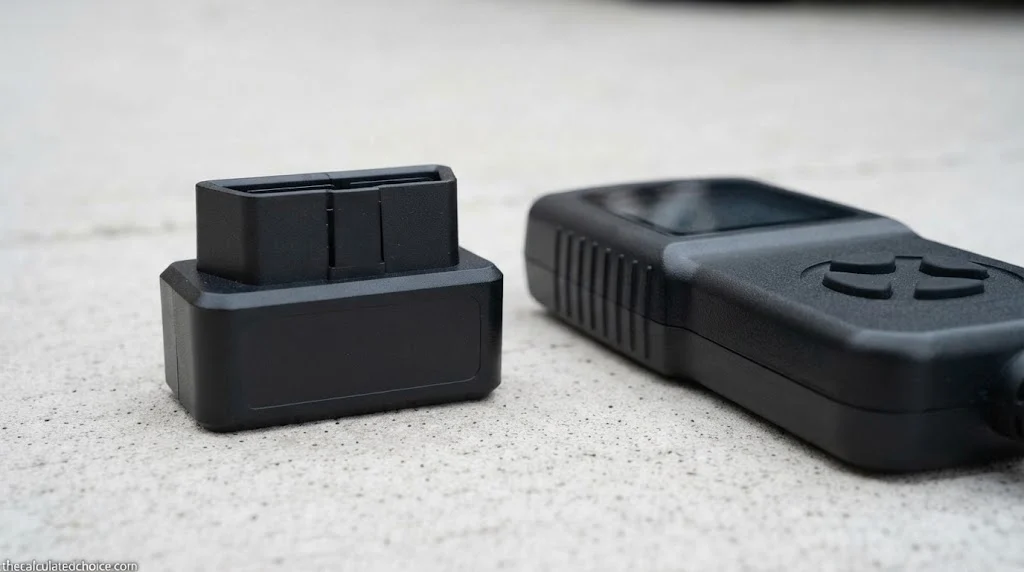
- Ford MS-CAN and GM SW-CAN: The Veepeak OBDCheck BLE page says MS-CAN and SW-CAN are not supported and that commercial vehicles using J1939 are not supported, so no app can add them. The OBDLink MX+ lists support for both networks.
- BMW coding: The OBDLink CX is built for BimmerCode and lists 100% coverage of BimmerCode vehicles and features. Veepeak notes that older BMW and Mini models and G series cars are not fully supported with BimmerCode.
- Active tests and resets: Veepeak lists oil light and maintenance resets, EPB/brake reset, relearning, and adaptation as unsupported. The Innova 5610 lists bidirectional system tests, special functions and calibrations, and 35 workshop tools.
- Vehicle exclusions: The ANCEL AD310 supports 12V diesel and gasoline cars and does not support hybrid or electric vehicles, and the page says it does not work with trucks, pickups, or vans. The 5610 lists hybrid battery cell voltage reading. On FCA vehicles that require AutoAuth, the 5610 FAQ says handheld and dongle scanners cannot erase codes, perform oil resets, or handle battery initialization.
Bluetooth vs wired OBD2 scanner: pairing rules, app costs, and security
In a bluetooth vs wired obd2 scanner decision, wired scanners have no wireless setup, while Bluetooth scanners need an app and follow their own pairing rules:
- Do not pair Bluetooth LE adapters in iOS Settings: Veepeak says its BLE adapter does not need regular Bluetooth pairing and to connect directly in the app instead of the iOS Bluetooth settings. The OBDLink CX page lists easy in-app pairing to iOS and Android.
- Use the right app: OBDLink includes free iOS, Android, and Windows apps. The Veepeak adapter relies on third-party apps such as Car Scanner ELM OBD2, OBD Fusion, and Torque, and Veepeak notes some are separate purchases.
- Avoid imitation apps: Veepeak warns against apps with confusing names that imitate Torque or Car Scanner and may ask for a subscription.
- Think about wireless access: The OBDLink MX+ lists 128-bit data encryption and a Connect button that requires physical access to enable pairing.
Bluetooth vs wired OBD2 scanner displays, cable reach, and temperature limits
- Cold garages: Check the rating before leaving any tool in a car. The ANCEL AD310 manual lists 0 to 60°C (32 to 140°F) for operation. The dongles list wider or colder limits: -4 to 131°F on the OBDLink MX+ and CX, and -40 to 185°F on the Veepeak OBDCheck BLE. Your phone has to work in the cold too.
- Reach: A 2.5 ft cable reaches the driver’s seat from the DLC but not the engine bay. A Bluetooth scanner lets you stand at the engine while watching live data on your phone.
- Hands-on use: Physical buttons on a corded scanner keep greasy fingers off a phone screen, while a phone gives you a larger display and easier graphing.
What to buy: matching the scanner type to your vehicle
To settle the bluetooth vs wired obd2 scanner choice for your own driveway, match your repair goals to one of these four profiles:
- Choose a budget wired reader if: you want a simple, battery-free tool to read and clear check engine codes, see the 11 readiness monitors, and view live data on a 12V gas or diesel car without phone apps or pairing. The ANCEL AD310 fits this profile and carries a 1-year limited warranty. Check the ANCEL AD310 on Amazon.
- Choose a budget Bluetooth LE adapter if: you already use third-party apps such as Car Scanner ELM OBD2, OBD Fusion, or Torque, want a pocket-size dongle (2.11 oz) with a wide temperature range, and will unplug it when the car sits for more than 1 week. The Veepeak OBDCheck BLE lists a 1-year warranty and a 30-day money-back guarantee. Check the Veepeak OBDCheck BLE on Amazon.
- Choose a feature-rich Bluetooth scanner if: you want phone graphing plus deeper coverage. The BlueDriver Pro lists enhanced ABS, airbag, and transmission codes, Mode 6, and Repair Reports, with a 1-year limited warranty and a 180-day return window (Amazon listing). The OBDLink MX+ adds Ford MS-CAN and GM SW-CAN access, a 2 mA BatterySaver mode, and a 3-year warranty (Amazon listing).
- Choose a bidirectional wired handheld if: you do repairs that need active component tests, hybrid battery cell voltage readings, and the 35 workshop tools listed for the Innova 5610, which Innova says has free updates with no subscription and a 1-year warranty. It is sold for US and Canada use only (Amazon listing).
The right bluetooth vs wired obd2 scanner choice comes down to how long your car sits, which modules you need, and whether you want a built-in screen. If the car sits for weeks, a wired tool or a dongle with a sleep mode is the safer match.
How we researched this guide
We did not run hands-on vehicle tests for this article. We compared every bluetooth vs wired obd2 scanner specification using published maker pages, user manuals, and warranty terms.
Sources: ANCEL AD310 User Manual, ANCEL AD310 product page, Veepeak OBDCheck BLE, OBDLink MX+, OBDLink CX, BlueDriver Pro, Innova CarScan Pro 5610.
Frequently asked questions
Can I leave a Bluetooth OBD2 scanner plugged in all the time?
Why won’t my Bluetooth OBD2 scanner pair in my iPhone Bluetooth settings?
Do Bluetooth OBD2 scanners require a monthly subscription?
Are wired OBD2 scanners more accurate than Bluetooth scanners?
Which works better in a freezing garage: a Bluetooth or wired OBD2 scanner?
Can a Bluetooth OBD2 scanner perform bidirectional active tests and resets?

Researched by Shahzad
Amazon seller who researches products using sales-rank history, price tracking and owner reviews before recommending anything. Read our disclosure.