
We may earn a commission when you buy through links on this page, at no extra cost to you. It never decides what we recommend. How we make money
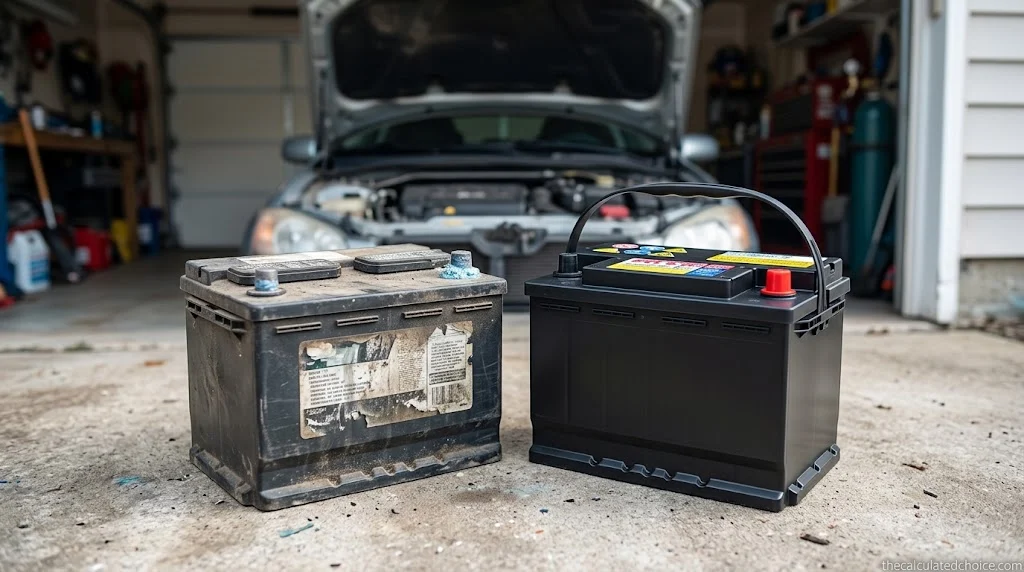
How long do car batteries last? The honest answer is three to five years for most drivers, and the national average sits a little past four and a half. But that range hides a big difference. A battery in Phoenix and the same battery in Minneapolis can be a full year apart, and the way you drive matters almost as much as where you live.
This guide is for US drivers who want to know how much life their own battery has left, not just the average. We pulled the lifespan numbers from Battery Council International’s failure study, AAA and Interstate Batteries, then turned them into a simple way to estimate where your battery stands, when to start testing it, and what shortens or stretches its life.
How long do car batteries last? The short answer
- 3 to 5 years The typical range AAA gives for a car battery.
- About 55 months The average age at failure in the BCI study, roughly four and a half years.
- About 47 months in the South Hot climates wear batteries out faster.
- About 59 months in the North Cooler climates stretch battery life closer to five years.
- 5 to 7 years for AGM AAA’s range for AGM batteries.
- 4 weeks to 2 months How long a parked car’s battery can last before it may be too weak to start, per Interstate.
- Test from year three AAA recommends a yearly test once a battery is three years old.
How long do car batteries last where you live?
Climate is the biggest single factor, and the data on it is better than most articles let on. Battery Council International, the trade group for North American battery makers, runs a failure-mode study on worn-out starter batteries. As summarized by Battery University, its study found an average age at failure of 55 months, with batteries in the cooler North reaching 59 months and those in the warmer South 47 months.
AAA lands in the same place from the service side: five years or longer in cooler northern climates, about three years in hot southern ones. Its explanation is heat. Under-hood temperatures can pass 200°F in summer, and heat speeds up the chemical wear inside a lead-acid battery.
| Where you drive | Typical life | Source | Start testing |
|---|---|---|---|
| Hot South and Southwest (Texas, Arizona, Florida) | About 3 to 4 years; BCI average 47 months | AAA, BCI study | By year two or three, before each summer |
| Middle of the country | About 4 to 5 years; BCI national average 55 months | BCI study | Year three, then every year |
| Cool North (Minnesota, Michigan, New England) | About 5 years or more; BCI average 59 months | AAA, BCI study | Year three, before each winter |
The study figures are averages across many batteries, not promises. Plenty of batteries in Arizona last five years, and plenty in Maine quit at three. Use the numbers to decide when to start paying attention, not when to throw a battery away.
Car battery life by type: flooded, EFB and AGM
The type of battery under your hood changes the answer too. Most older and lower-cost cars use a standard flooded lead-acid battery. Many newer cars, especially those with automatic engine stop-start, use an enhanced flooded battery (EFB) or an absorbent glass mat (AGM) battery. Our AGM vs flooded battery guide explains which type your car needs.
| Battery type | Typical life | What to know |
|---|---|---|
| Standard flooded lead-acid | 3 to 5 years | The common, lower-cost type. AAA’s 3-to-5-year range applies here. |
| AGM | 5 to 7 years | AAA’s range for AGM. It handles repeated discharging and recharging better, which is why start-stop cars use it. |
| EFB | Not published as a single figure | A tougher flooded design. Midtronics calls it the minimum for lighter-duty start-stop cars. |
| Standard flooded in a start-stop car | About 6 to 18 months | The failure window Midtronics gives when the wrong type goes into a start-stop car. |
That last row is the most expensive mistake on the list. A start-stop car restarts its engine many times on every drive, and Midtronics, which makes the battery testers many dealers use, says a standard flooded battery is not built for that duty. If your car came with an AGM or EFB battery, replace it with the same type.
How much life is left in your battery?
Averages become useful once you compare them to your own battery’s age. Divide the battery’s age in months by the typical life for your region, and you get a rough share of its expected life already used. The action bands below are our own planning rule, built on the BCI averages and AAA’s testing advice. They are not a manufacturer specification, but for the question of how long should a car battery last in your own driveway, they beat a single national number.
Battery life used = age in months ÷ typical months for your region
Typical months (BCI study): South 47 · national average 55 · North 59Example 1, Houston: 42-month-old battery ÷ 47 = about 89% of typical life usedExample 2, Minneapolis: the same 42-month-old battery ÷ 59 = about 71% usedUnder 60%: normal checks at oil changes · 60% to 85%: test before summer and winter · Over 85%: test now and budget for a replacementSame battery, same age, very different plans. The Houston driver should test it this month. The Minneapolis driver can wait for a pre-winter test, as long as the car starts normally and shows none of the warning signs.
Adjust for how you drive. If your car mostly makes short trips, sits for days at a time, or runs a lot of accessories, move up one band. Our guide on how long to drive to charge a car battery explains why short trips fall behind. If the battery already shows signs of a bad car battery, such as a slow crank or a battery light, skip the math and test it.
How to find your battery’s age
There is no single date-code format across brands, which is why so many drivers guess. Start with these, in order:
- Your receipt or service records. The install date is the most reliable start date.
- A sticker on the battery. Many shops add a month and year when they install it.
- The maker’s date code. It is usually stamped into the case or printed on a label, and each brand reads it differently. Interstate lets you enter its code on its warranty lookup, and OPTIMA prints its date code on the small Non-Spillable label.
Check the date on a new battery before you buy it, too. If a newer battery still keeps going flat, our guide on why a car battery keeps dying covers the other causes. Interstate notes that a battery whose date is more than six months old was likely sold drained, so ask for a fresher one or charge it fully before you install it.
What shortens car battery life
Batteries rarely just get old. Something usually speeds them along. These are the factors the sources we checked agree on, and what each one does:
| Factor | What it does | What helps |
|---|---|---|
| Heat | Speeds up internal wear; AAA cites under-hood temperatures above 200°F | Park in shade or a garage; test before summer |
| Short trips | AAA says drives under 10 miles may not replace the energy the start used | A longer drive each week, or a smart charger |
| Sitting for weeks | Clocks, alarms and modules slowly drain it while parked | A battery maintainer for storage |
| Deep discharges | AAA says completely draining a battery significantly shortens its life | Recharge a flat battery fully and promptly |
| Loose hold-down | Vibration can damage the battery; AAA flags loose or missing hold-down hardware | Check that the clamp is tight |
| Charging problems | Firestone notes a failing alternator can overcharge or undercharge the battery | Test the charging system when a battery dies young |
| Wrong battery type | A standard flooded battery in a start-stop car can fail in 6 to 18 months, per Midtronics | Replace AGM with AGM and EFB with EFB or better |
How long does a car battery last if the car sits?
This is a different question from overall lifespan, and the answer is weeks, not years. Interstate Batteries says a car battery can last about four weeks to two months before it dies, because the radio memory, clock, alarm and computer modules keep drawing a little power with the key off. AAA gives a similar window of a month or two.
The sources differ a little on how much driving keeps it topped up. AAA suggests driving once a week for at least 20 minutes. Interstate says once a week for at least 30 minutes at highway speeds. If neither fits your schedule, a battery maintainer is the easier fix; our picks for the best battery maintainer for winter storage cover cars that sit for months, and our comparison of a battery maintainer vs trickle charger explains why the smart kind is safer to leave connected. Before the first freeze, work through our full checklist on how to winterize your car.
How to make a car battery last longer
None of these will turn a four-year battery into a ten-year battery. Together, they keep it from dying early, which is where most of the lost value is.
- Keep it charged. A battery that sits partly discharged wears faster. Give it a longer drive each week or use a smart maintainer.
- Keep the terminals clean. AAA suggests cleaning them every three to six months, or whenever buildup appears.
- Check the hold-down. A battery that can move in its tray takes a beating on every pothole.
- Limit heat where you can. Shade and garage parking help most in hot states.
- Test on a schedule. Interstate recommends testing at least twice a year, before winter and before summer. A free parts-store test or your own car battery tester both work.
- Fix the cause when one dies young. A battery that fails in its first two years often points to a drain, a charging problem or the wrong battery type.
When to replace a car battery, even if it still starts
Age alone is not a reason to replace a battery that tests well. Age plus a weak test is. Replace it when any of these is true:
- It fails a load test or a digital battery test.
- It still reads below 12.4 volts after a full charge and rest, the replacement point in Clore Automotive’s load tester manual. Our car battery voltage chart explains the readings.
- It is past the typical life for your region and tests borderline heading into winter or summer.
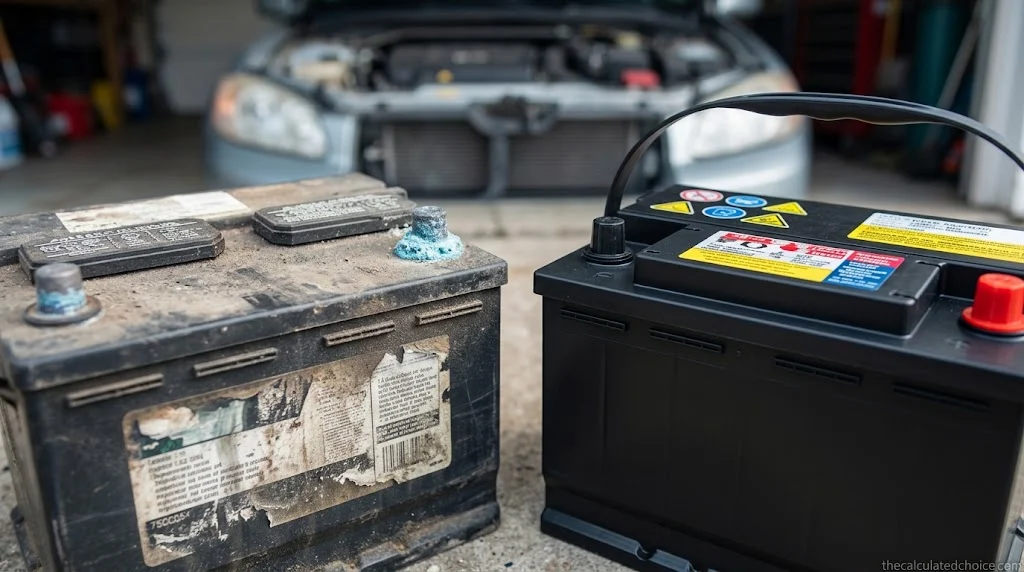
- The case is swollen, cracked or leaking, or it smells of rotten eggs. Do not charge or jump a battery like that.
When you do buy one, read the warranty closely. Many car battery warranties have a free-replacement period followed by a prorated period, where you only get partial credit. The free-replacement period is the number that matters, and it is the maker’s own bet on how long the battery will last. AAA recommends looking for a full-replacement warranty of three years or more. Our guide to the best car battery for cold weather compares the free-replacement terms of five AGM batteries.
Car battery life: myth vs fact
| Myth | Fact |
|---|---|
| Cold weather kills car batteries. | Heat does most of the damage, per AAA. Interstate adds that a cold snap exposes weakness that warm weather was hiding. |
| Every battery lasts about five years. | The BCI study average was 55 months nationally but only 47 months in the South. |
| A battery lasts longer if you rarely drive. | A parked car’s battery slowly drains, and AAA says deep discharges significantly shorten battery life. |
| Any 12-volt battery that fits will do. | A standard flooded battery in a start-stop car can fail in 6 to 18 months, according to Midtronics. |
| A new battery from the shelf is fresh. | Interstate says a battery dated more than six months back was likely sold drained. Check the date before you buy. |
Frequently asked questions
How long does a car battery last on average?
Should a 7-year-old car battery be replaced?
What kills car batteries quickly?
How long does a car battery last without driving?
Can a car battery last 10 years?
Do AGM batteries last longer than regular batteries?
How often should a car battery be tested?
How we researched battery life
We took the lifespan averages from Battery Council International’s failure-mode study as summarized by Battery University, and checked them against AAA’s battery guides and Interstate Batteries’ advice on testing and storage. Midtronics supplied the start-stop battery figures, and Firestone the charging system effects. Where two sources give different numbers, such as how long to drive a parked car each week, we show both. The climate table, the life-used formula and its action bands are our own work built from those sources, and we label the bands as a planning rule rather than a specification. We did not hands-on test any battery for this article, and no brand paid for or reviewed it.
Sources: Battery University BU-806a (BCI study data) · AAA: how long car batteries last · AAA battery maintenance tips · Interstate: sitting car batteries · Interstate: battery testing · Midtronics on start-stop batteries

Researched by Shahzad
Amazon seller who researches products using sales-rank history, price tracking and owner reviews before recommending anything. Read our disclosure.